
← Back to blog 5 min read
PlatformIndustry
Video Content Distribution: How It Works and Why It Matters
Yaly Sami
Operations and Accounts
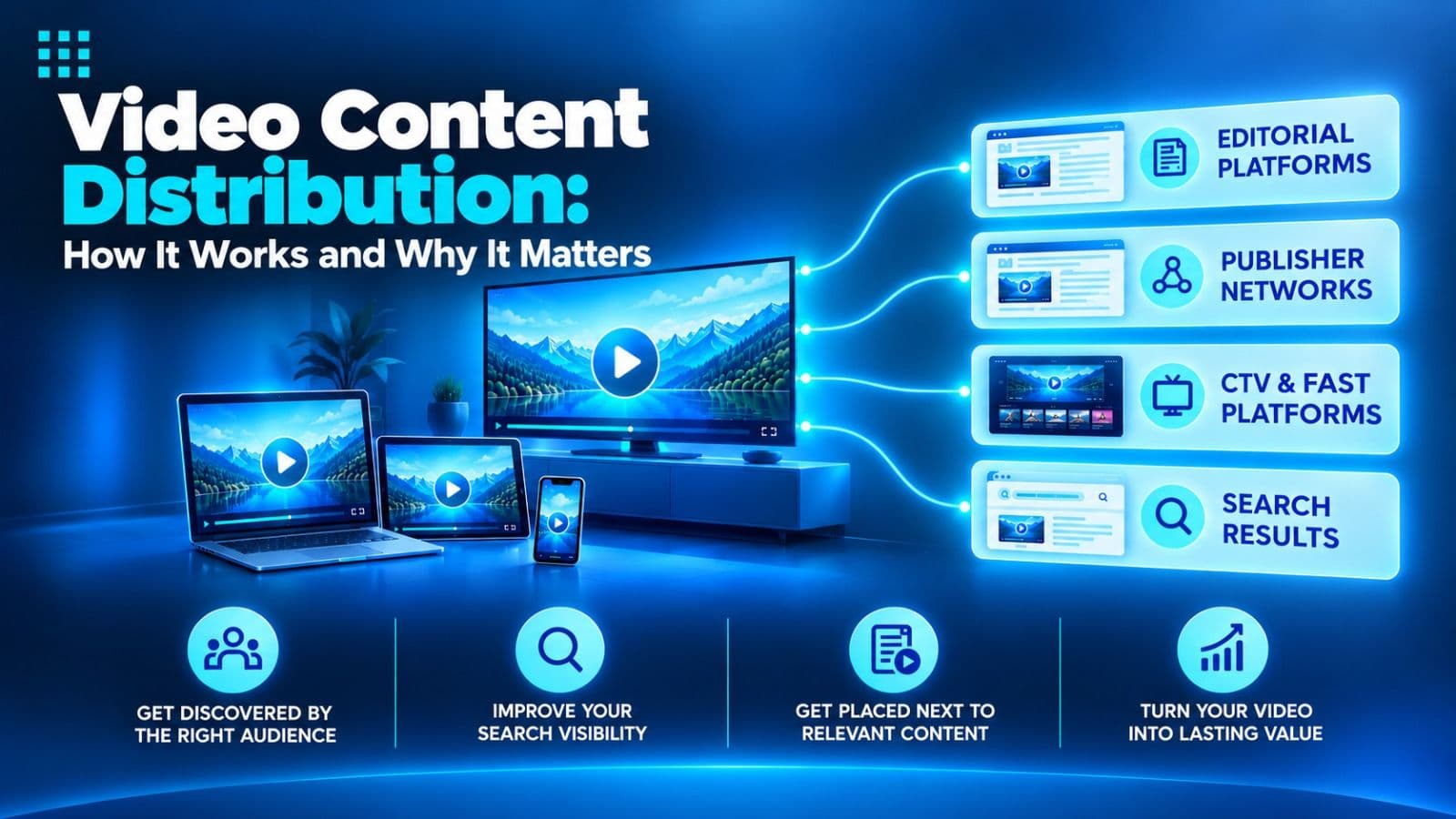
Most video lives and dies on one channel. You publish it, it reaches the audience that already follows you, and then it stops. Video content distribution is what changes that. It is the process of taking a single video and getting it in front of audiences far beyond your own channel, across many platforms at once, each one serving it to its own viewers.
It sounds simple, and the idea is. But how video content distribution actually works, and why it matters so much in 2026, is worth understanding properly, because it has quietly become one of the highest-leverage moves a publisher can make.
What video content distribution actually is
At its core, video content distribution is licensing your video to third-party platforms that serve it to their existing audiences. Those platforms run ads against your content, and the ad revenue is shared with you. You supply the content. They supply the audience and the monetization.
This is fundamentally different from posting to social media. When you upload to TikTok or Instagram, you are submitting to an algorithm and hoping it serves your content to the right people. With distribution, the platform has already agreed to carry your content. You have a distribution arrangement, not just an upload.
That distinction is the whole game. One is a hope. The other is an agreement.
The channels video content distribution reaches
Good video content distribution is not one destination. It is several very different kinds of destination, each reaching a different audience in a different context:
Editorial platforms. MSN Video, Yahoo News, Apple News, Flipboard, SmartNews, and similar, where your video appears alongside articles people are already reading.
Publisher networks. Contextual video networks like Primis and Ex.co that embed premium video alongside articles across publisher sites.
CTV and FAST platforms. Roku Channel, Amazon Fire TV, Pluto TV, Tubi, and Xumo, where your video plays on the biggest screen in the house.
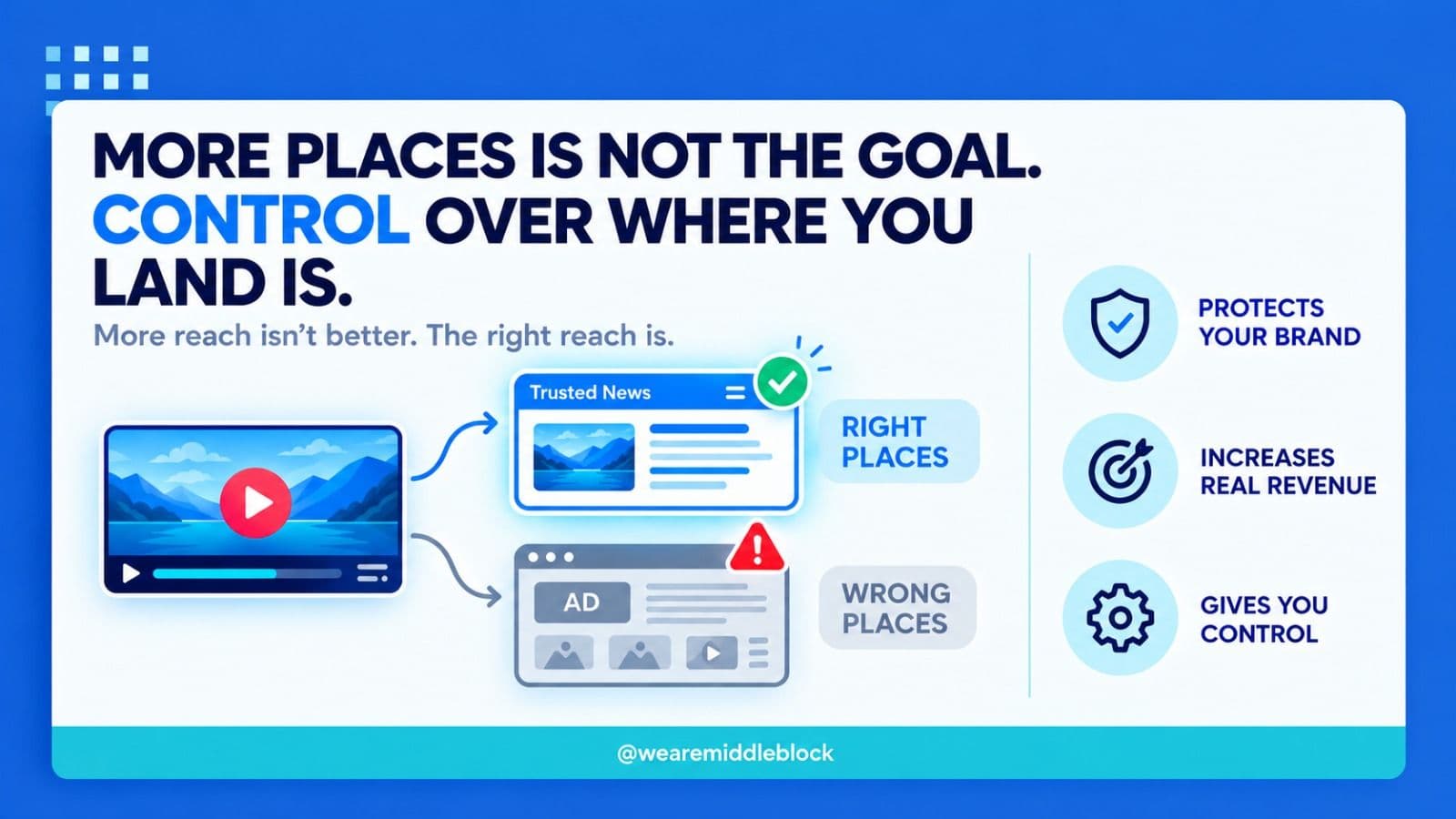
Each channel reaches a different audience, in a different context, with different revenue dynamics. A diversified distribution strategy means your content is working across all of them at once, instead of depending on any single one.
How video content distribution actually works
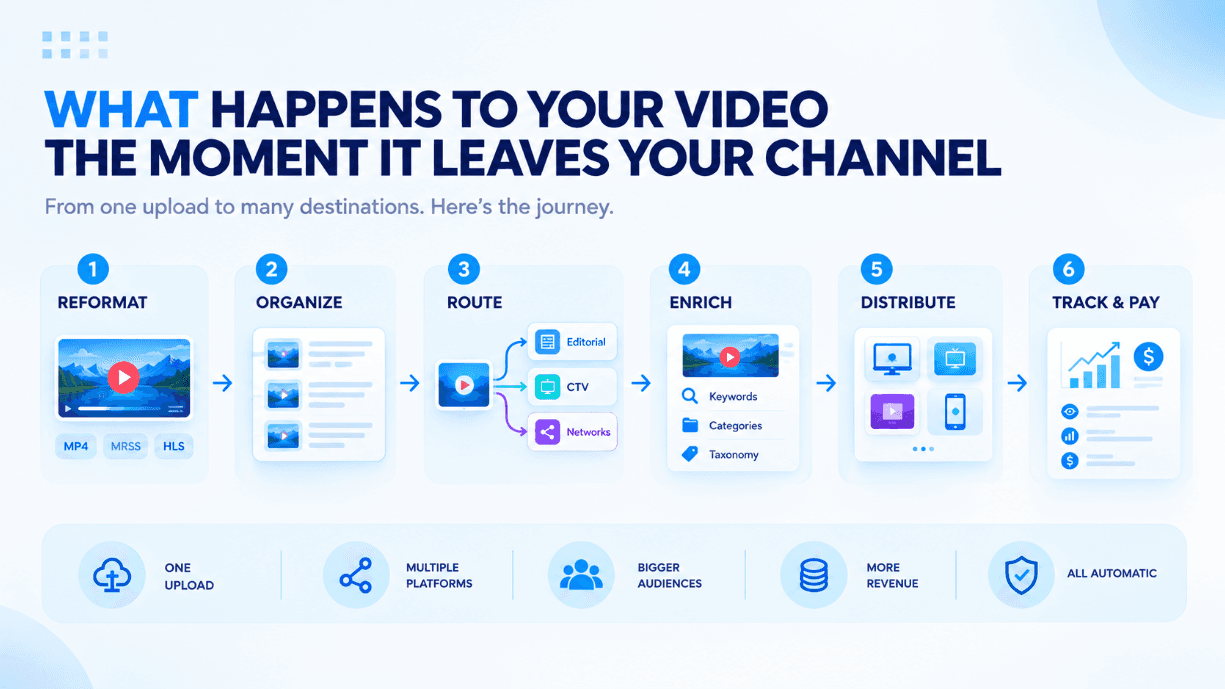
Here is where it gets technical, and where most of the real work hides. Reaching all of those platforms is not a matter of uploading the same file everywhere. Each destination wants your content in a different shape. Done properly, video content distribution handles:
Feed generation in the format each receiving platform requires. Most use MRSS feeds, but each has its own variations.
Content organization into the structure each platform expects. Some want chronological feeds, some want topic-based playlists, some want curated daily selections.
Content filtering so the right videos reach the right platforms. Premium editorial gets news-grade content, CTV channels get long-form lean-back content, ad networks get high-engagement clips.
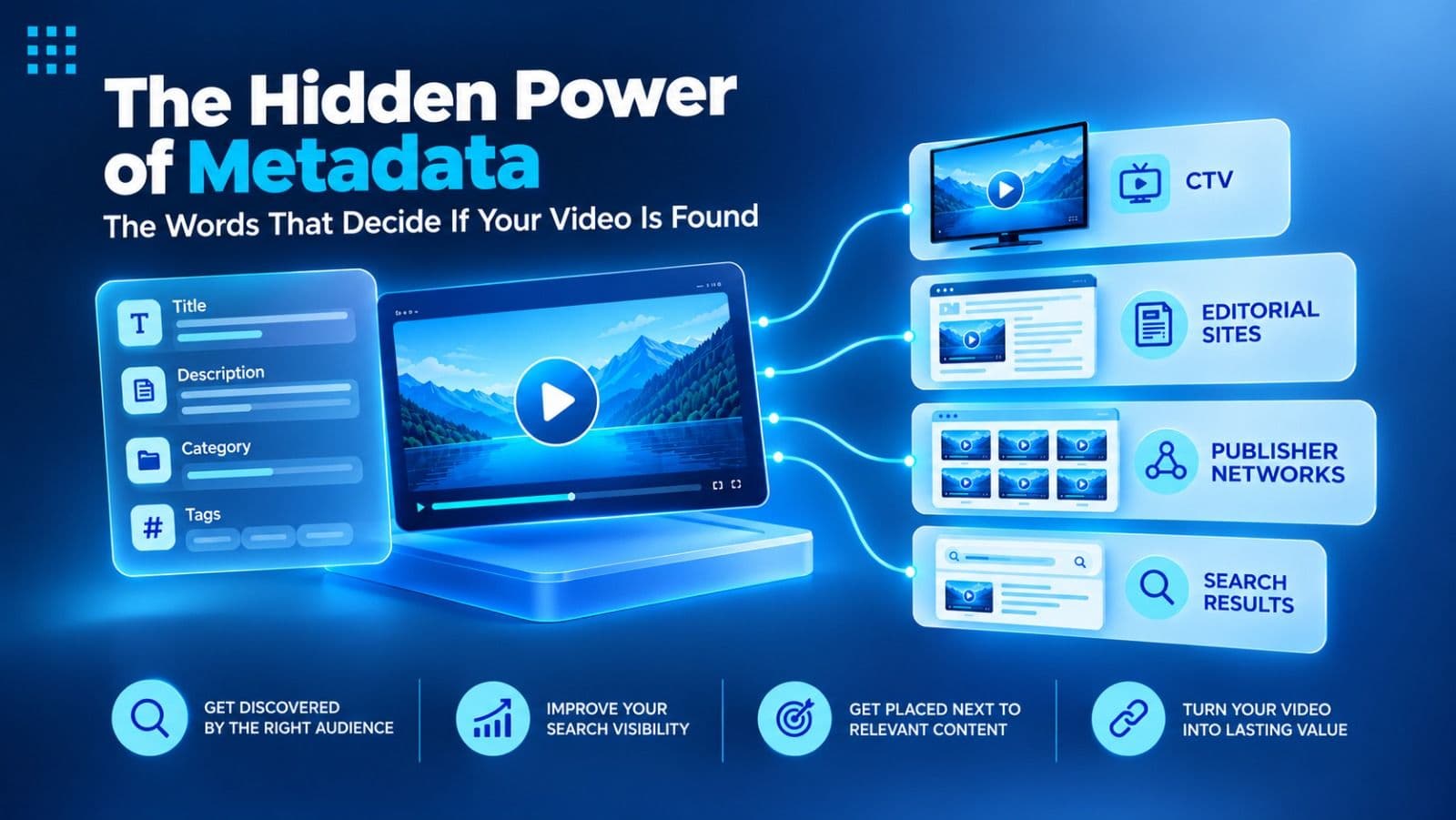
Metadata enrichment so your content gets matched to the right context, using keywords, categories, and standard content taxonomy.
Consolidated reporting that pulls views, impressions, and revenue from every platform into one place, with payouts from multiple sources arriving predictably.
Do all of that by hand, platform by platform, and it is a full-time operation. Which is exactly why most great video never gets distributed at all.
Why video content distribution matters now
The reason this matters more in 2026 than ever is simple: the audience has scattered, and the revenue has scattered with it. People watch video on editorial sites, on connected TVs, inside apps, in contexts you do not own. If your video only lives on your channel, you are reaching a fraction of the audience it could, and earning a fraction of what it could earn.
Video content distribution closes that gap. The same video, already made, starts earning across editorial, CTV, and publisher networks at once. It is not more production. It is more return on production you have already done. And because the revenue comes from several independent sources, you are far less exposed to any single platform changing its rules.
Where Middle Block fits
Middle Block is a video content distribution network built to handle all of this through a single integration. You bring your existing video, and Middle Block generates the right feed for each partner, organizes your content into the structure each platform expects, filters the right videos to the right destinations, and distributes across editorial platforms, CTV channels, and publisher networks. Transparent, per-platform reporting then shows exactly what each integration earns, so you can see your distribution working rather than taking it on faith.
One upload in. Distribution everywhere out.
The bottom line
Video content distribution is how one video stops being a single post and becomes an asset that works across the whole market. It reaches audiences you do not own, earns from sources you do not have to manage one by one, and turns video you have already made into revenue that compounds across platforms. In 2026, it is not a nice-to-have. It is how video actually reaches its full value.
If you want your video distributed across every platform that matters, talk to our team about Middle Block.
Published at
— ABOUT THE AUTHOR
Yaly Sami
Operations and Accounts
Yaly has been managing platform operations for several years and knows the system inside and out — fueled by a bit too much coffee.
Connect on LinkedIn— READ NEXT
More from the team.


— LOOKING FOR SOMETHING SPECIFIC?
Talk to our team.
If you have questions about content syndication, partnerships, or the platform — we're here.