
The Hidden Power of Metadata: The Words That Decide If Your Video Is Found

Guido Smit
Backend & DevOps
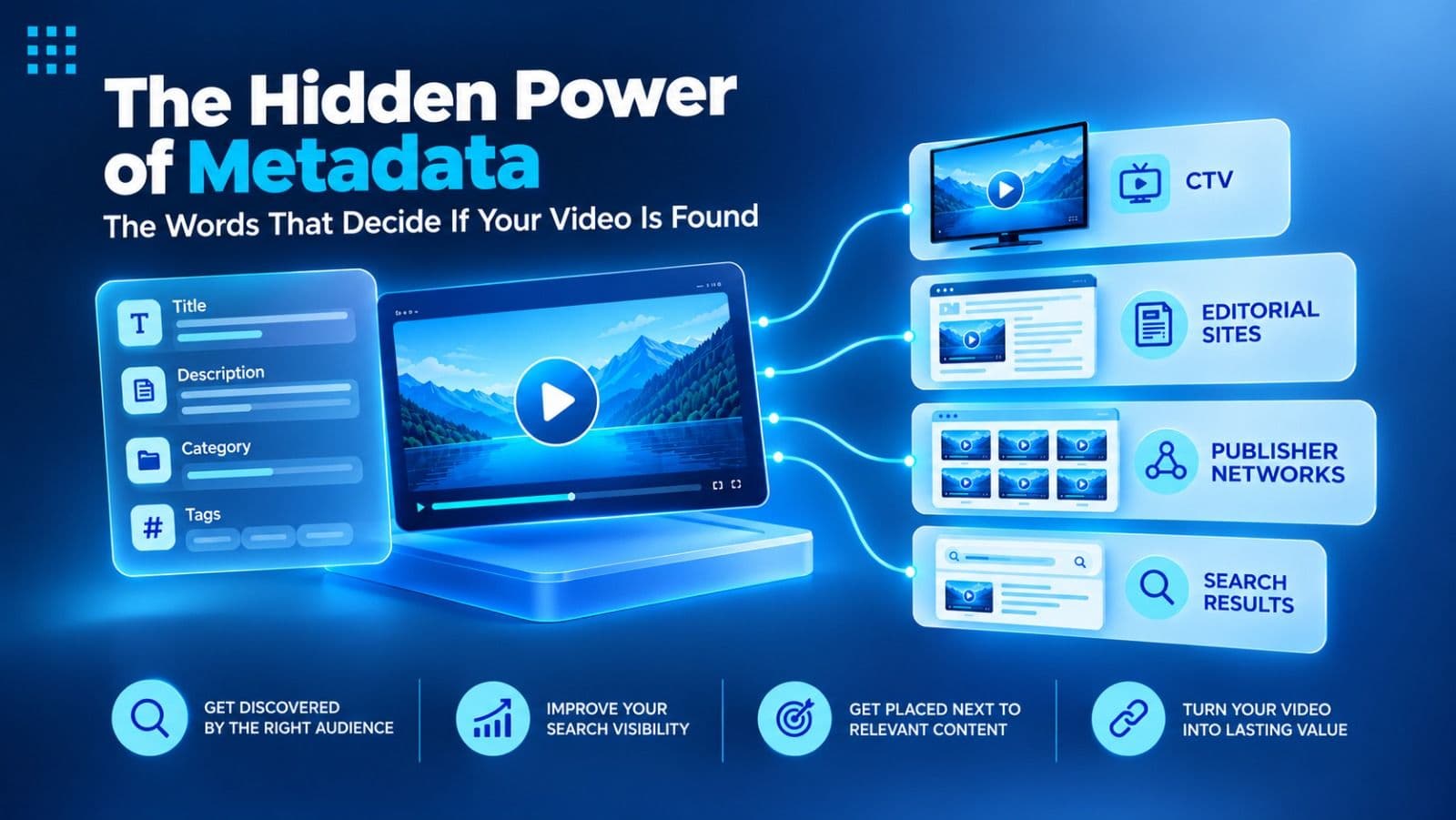
You can make the best video in the world, and it can still go completely unfound. Not because the footage is weak or the editing is sloppy, but because of something most people treat as an afterthought: the words attached to it.
Titles, descriptions, categories, tags. It sounds like paperwork. It is actually the difference between a video that gets discovered and one that quietly disappears. Metadata is the most underrated lever in video, and understanding why changes how you think about every upload.
Discovery does not see your video. It reads about it
Here is the core idea. When your video travels beyond your own channel, the platforms and discovery engines deciding whether to show it are not watching it the way a person would. They are reading its metadata to understand what it is about.
The title tells them the subject. The description adds context. The category places it in a bucket. The tags connect it to topics. Together, that text is the only thing that tells a system where your video belongs. If the words are missing or vague, the system has nothing to go on, and your video simply does not get matched to anything.
In other words, your metadata is how your video introduces itself to everything that could recommend it. A weak introduction, and it never gets in the room.
Good metadata is what gets you placed next to the right content
This is where it stops being paperwork and starts being money. When your metadata is clear and specific, your video can be placed automatically next to content it actually fits.
Think of a well-tagged video about market volatility. With the right title, description, and tags, it can be surfaced alongside finance articles across multiple platforms, in front of readers already interested in exactly that topic. That is discoverability you could never achieve by posting to a single channel and waiting. The video did not change. The words around it did the work.
Vague metadata gets you nothing. Precise metadata gets you placed, again and again, in the right context.
Metadata is also an SEO engine
There is a second payoff that most people miss. Clean, structured metadata does not just help on the platforms you syndicate to. It strengthens your own search presence at the same time.
Videos with structured metadata that appear across editorial platforms generate referral traffic back to your site, build domain authority through quality links, and improve how you surface in video search results. The same titles, descriptions, and tags that get your video discovered on a partner platform are also working for your own search visibility. One effort, two results, which is exactly why this is work worth doing regardless.
What good metadata actually looks like
Being precise does not mean being clever. It means being clear. In practice, strong metadata is:
Proper titles. Descriptive and keyword-aware, telling both people and systems exactly what the video is about. Compelling titles also significantly influence whether someone clicks.
Real descriptions. Context in plain language, not a single line or a copy-paste. This is where a system picks up the detail that decides placement.
Accurate categories. The right bucket, so your video lands in the right feeds instead of the wrong ones.
Specific tags. The topics and keywords that connect your video to related content. A well-tagged video gets matched. An untagged one sits invisible.
None of this requires new production. It is a layer of care on top of video you have already made, and it is the layer that decides whether anyone sees it.
Where Middle Block fits
Metadata only pays off if it is done consistently and in the format each platform expects, and that is a lot to maintain by hand. Middle Block enriches your content's metadata so it gets matched contextually, using keywords, categories, and standard content taxonomy, so your video is understood and placed correctly across the network. You bring well-made video with a solid starting point, and the distribution side makes sure the words that matter are in place everywhere it lands.
The result is video that does not just exist on many platforms, but is actually findable on them.
The bottom line
The best video is the one that gets seen, and getting seen starts with words, not footage. Titles, descriptions, categories, and tags are not busywork. They are how your video is understood, matched, and discovered everywhere it travels. Treat metadata as part of making the video, not a chore after it, and you turn work you have already done into work that can actually be found.
If you want your video understood and discovered across every platform that matters, talk to our team about Middle Block.
— ABOUT THE AUTHOR
Guido Smit
Backend & DevOps
Guido is a unique backend developer with out-of-the-box ideas, emphasizing PHP (Symfony), Python, or Golang.
Connect on LinkedIn— READ NEXT
More from the team.


— LOOKING FOR SOMETHING SPECIFIC?
Talk to our team.
If you have questions about content syndication, partnerships, or the platform — we're here.