
Simplifying Video Content Delivery with MRSS Feeds

Guido Smit
Backend & DevOps
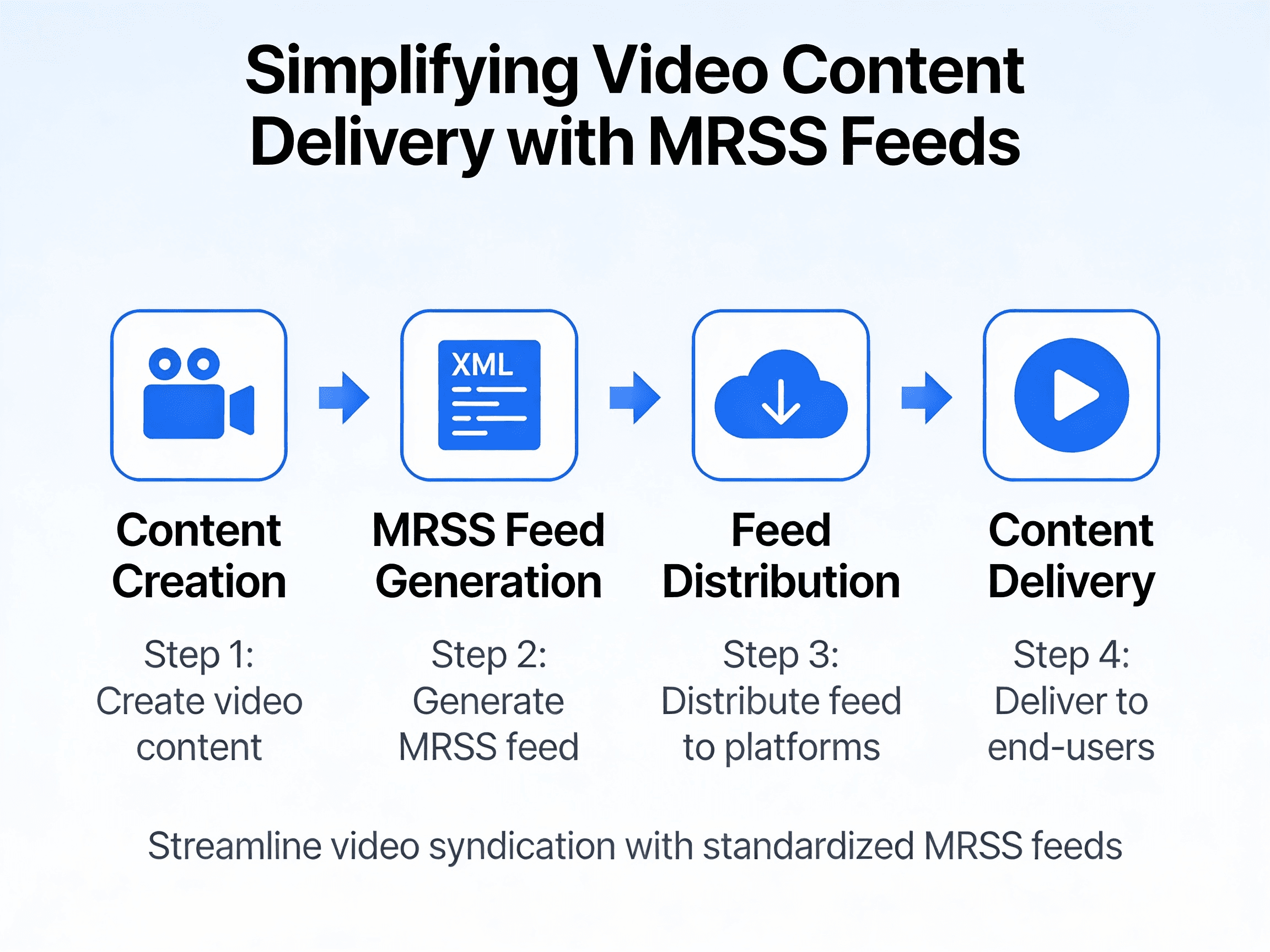
In digital publishing, efficient content distribution is essential. Publishers are constantly looking for ways to streamline video syndication and ensure content reaches the right audiences quickly. One solution that's become increasingly valuable: MRSS — Media RSS — feeds. By using MRSS, publishers can automate video content delivery, improving efficiency and expanding reach.
Here's a closer look at what MRSS feeds are and how they benefit publishers.
What is an MRSS feed?
An MRSS feed is an extension of the standard RSS feed, designed specifically for media — particularly video. It allows automatic syndication of multimedia content including video, audio, images, and metadata. MRSS feeds give publishers a seamless way to distribute and manage large volumes of video across multiple platforms, without constant manual updates.
Key benefits
Simplified syndication. The biggest benefit of MRSS is automation. Publishers can deliver video content to third-party platforms, websites, and apps without manually uploading each video. The feed handles the entire process — efficiently, in real time. Publishers save valuable time and resources.
Expanded reach with minimal effort. MRSS feeds make it easy to distribute video content to multiple platforms simultaneously. By setting up a feed once, publishers ensure videos appear on various websites, social platforms, and apps without additional effort. Expanded reach attracts new audiences, drives more views, and increases engagement — while keeping overhead low.
Better content organization. MRSS feeds support metadata — titles, descriptions, categories, tags — that platforms and viewers use to discover and categorize content. The structure makes videos easier to find and ensures the right content reaches the right audience.
Real-time updates. MRSS feeds are dynamic. As new videos are added, they automatically appear on connected platforms and sites. Audiences always have access to the latest content, no manual intervention needed. For publishers producing high volumes or working tight schedules, real-time updating is invaluable.
SEO and discoverability. Keyword-rich metadata in the feed makes content more search-engine-friendly. Higher search rankings mean increased visibility — and a greater likelihood that audiences find and engage with content.
Consistency across platforms. Maintaining consistency across different platforms is challenging. MRSS feeds automate it. The same high-quality content delivers uniformly across every platform, eliminating errors and inconsistencies. Consistency reinforces brand identity and creates a more professional viewer experience.
Scalability. As publishers continue producing more video, scalability becomes a concern. MRSS feeds are highly scalable — supporting effortless distribution of large libraries. Whether managing a handful of videos or thousands, MRSS handles the load.
How Middle Block uses MRSS
We harness MRSS feeds to streamline distribution of high-quality, brand-safe video across our network. Automated syndication means publishers efficiently deliver fresh, engaging videos without the hassle of manual updates. Our use of MRSS lets us maintain consistency, improve discoverability, and scale our library effortlessly — giving publishers more time to focus on creating great content.
Conclusion
MRSS feeds are a meaningful upgrade for publishers looking to simplify and enhance video content delivery. By automating syndication, expanding reach, and improving discoverability, MRSS helps publishers deliver the right content to the right audience with minimal effort. We're committed to using innovative tools like MRSS to support our publishers and provide them with a streamlined, effective approach to video distribution.
If you'd like to learn more about how Middle Block can help with your video content strategy, get in touch.
— ABOUT THE AUTHOR
Guido Smit
Backend & DevOps
Guido is a unique backend developer with out-of-the-box ideas, emphasizing PHP (Symfony), Python, or Golang.
Connect on LinkedIn— READ NEXT
More from the team.


— LOOKING FOR SOMETHING SPECIFIC?
Talk to our team.
If you have questions about content syndication, partnerships, or the platform — we're here.