
What Is Video Monetization? A Guide for Publishers

Marom Yvgi
BizDev

Every publisher who makes video eventually asks the same question: how do I actually make money from this? That question has a name. It is called video monetization, and understanding it properly is the difference between video that drains your budget and video that pays for itself many times over.
The catch is that most publishers only use one or two ways to monetize, when there are several. This guide breaks down what video monetization actually means, the main models you can earn through, and the single factor that decides how much your video makes.
What video monetization actually means
Video monetization is simply the process of earning revenue from your video content. That is the whole definition. But the important part is how that revenue is generated, because the “how” is where most of the money is won or lost.
The most common foundation is advertising. When your video runs on a platform, ads run against it, and that ad revenue is shared with you. You supply the content. The platform supplies the audience and the monetization. That shared-ad-revenue model sits underneath most video monetization, but it is far from the only model, and treating it as the only one leaves money on the table.
The main video monetization models
Once your video travels beyond your own channel, it can earn in several different ways at once. Each behaves differently:
Shared ad revenue. The classic model. Your video runs, ads run alongside it, and you take a share. What you earn is tied to the rate advertisers pay, which is why the same view is worth very different amounts in different places.
Per-view payouts. On some publisher networks, you earn a payout per view rather than a share of a specific ad. A more direct link between how often your video is watched and what you are paid.
Time-based payouts. In subscription environments, some products pay based on watch time rather than impressions. Here, video that holds attention longer earns more from the same audience.
One piece of content. Multiple monetization paths. And because the revenue comes from several independent sources, far less exposure to any single platform changing its terms.
The factor that decides how much you earn
Here is what most guides miss. The model matters, but so does where your video plays, and that is often the bigger lever.
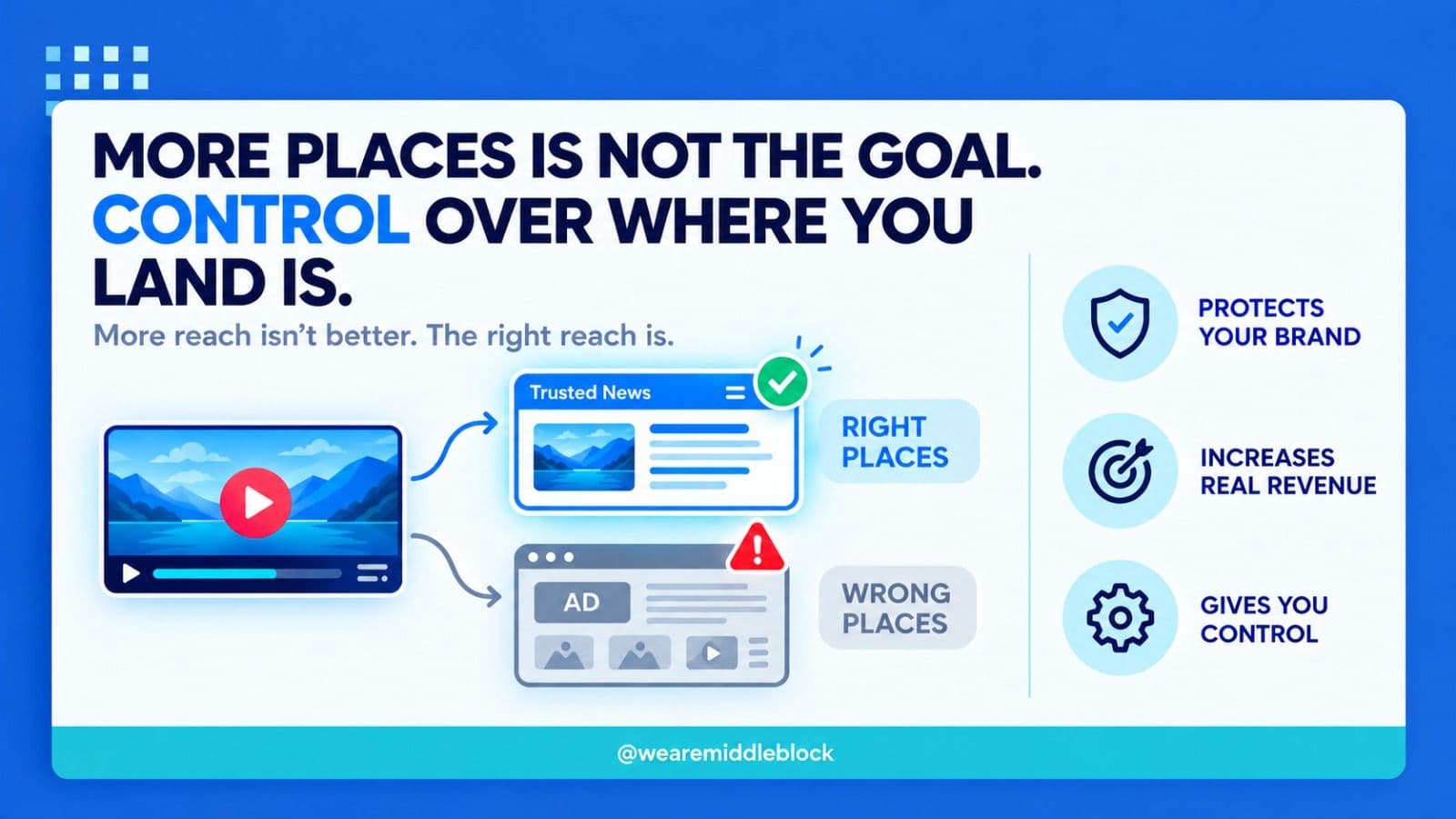
The same video can earn dramatically different returns depending entirely on the environment it runs in. A premium editorial placement or a connected TV screen commands higher rates than a low-value corner of the web, because advertisers pay more to appear in places they trust, next to content they want to be near. Better engagement pushes it higher still. Completion and real attention feed directly into what advertisers pay per view.
So video monetization is not just “turn on ads.” It is getting the right video, into the right environment, under the right model. Miss that, and you can be fully monetized and still earning a fraction of what the same content could make.
Why distribution and monetization are the same conversation
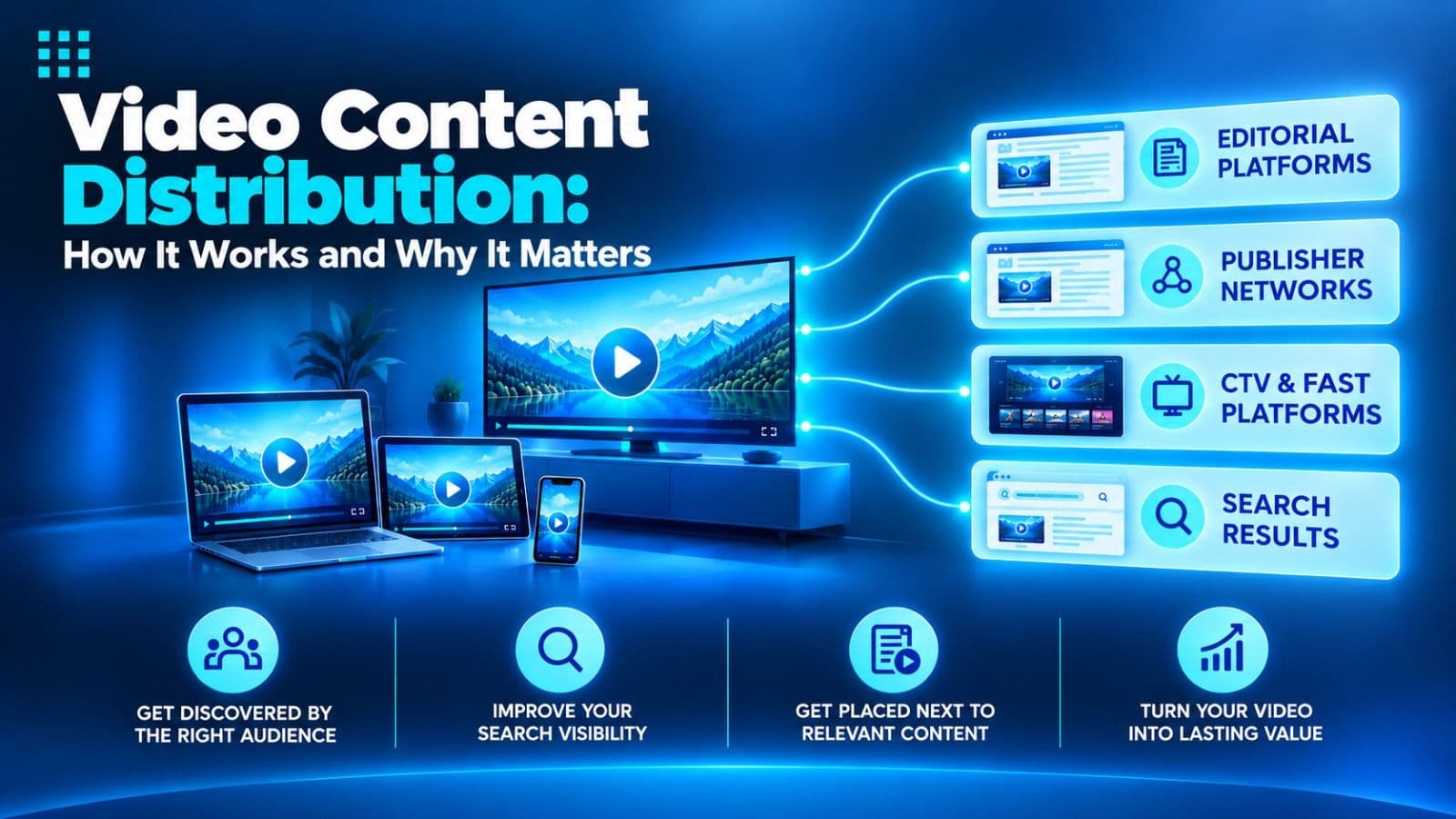
This is why you cannot really separate monetization from distribution. The number of places your video earns, the quality of those places, and the models available in each one are all decided by how your video is distributed.
A video stuck on one channel has exactly one way to earn. The same video distributed across editorial platforms, CTV channels, and publisher networks has many, each with its own model and its own rate. Distribution is not a step before monetization. Distribution is what makes real monetization possible.
Where Middle Block fits
Middle Block is built to turn one video into several of these monetization streams at once. Through a single integration, your existing video is distributed across editorial platforms, CTV channels, and publisher networks, each with its own way of paying. Content is filtered so your premium video reaches premium environments where it earns the most, and transparent, per-platform reporting shows exactly what each integration produces, so you can see your video monetization working rather than guessing at it.
You keep making video. Middle Block turns it into revenue from more than one source.
The bottom line
Video monetization is how your content earns, and the publishers who do it well are not relying on a single stream. They let one video earn through shared ad revenue, per-view payouts, and time-based payouts at once, and they make sure it lands in the environments that pay the most. The model matters. The placement matters more. And both come down to how your video is distributed.
If you want your video monetized across every platform that fits it, talk to our team about Middle Block.
— ABOUT THE AUTHOR
Marom Yvgi
BizDev
Marom has years of experience in business development with demonstrated skills establishing opportunities in video production and digital video publishing.
Connect on LinkedIn— READ NEXT
More from the team.



— LOOKING FOR SOMETHING SPECIFIC?
Talk to our team.
If you have questions about content syndication, partnerships, or the platform — we're here.